Boone Family Medicine Residency

Boone is a unique area for many reasons, but perhaps the most apparent is the stunning landscape. We boast easy access to countless trails, streams, mountains, valleys, lakes and rivers throughout the region, and anyone within driving distance to Boone is likely only minutes away from escaping into the wilderness. The Blue Ridge Parkway is a stunning sight and is frequently used by residents and faculty as they commute to work. The Parkway also provides several jump-off points to hikes, bouldering areas, and public water access for swimming, kayaking, and fishing.

Additionally, Boone offers four distinct seasons throughout the year. To help you understand some of the details about living here, we’ve listed some common activities and information about our seasons year-round:
Summer is warm enough for regular tubing trips down the Watauga River (a favorite for our Class of 2024), hammock or tent camping, and kayaking at Price Lake. Appalachian State brings a strong college-age population to Boone, and the summer is a quieter time as a result. Temperatures range from 60-75F and we get most of our rain in the summer, which is helpful for both local farmers and kayakers.
Fall is full of vibrant foliage–visitors come from across the country to watch the leaves change, and locals host several quaint Autumnal activities (hay rides, corn mazes, pumpkin patches, etc). In Boone, Fall temperatures typically range from 50-65F, with our first frosts (and snow!) starting in late November. This is a great time for hiking, walks through the Greenway, and attending App State football games.
Winter brings yet another transformation to Boone, with an average of 33 inches of snow a year. Boone is one of the snowiest places in North Carolina, and our town is well-equipped to handle the challenges of winter weather. Our roads are regularly salted and scraped in the winter months, and the hilly geography provides one of the premier sledding environments on the east coast. Our ski resorts are open in the winter, and all three are an easy drive from Boone. The temperatures in Winter range from 25-45F, but any local will tell you it’s the wind that makes it cold. Many homes in Boone come equipped with a fireplace, so get ready to cozy up!
Spring in Boone is a gentle experience. As the snow and ice melt, the surrounding landscape is covered in greenery and the wildlife comes out again to eat our gardens. Any distance from downtown Boone is bound to bring you in contact with deer, rabbits, foxes, and a wide array of songbirds and wildflowers. The temperatures in spring range from 40-70F, and we sometimes have a late dusting of snow in March or April. Spring is the perfect time for long hikes.
Boone hosts a dynamic range of populations which change throughout the year, and this pattern ensures that our residents see a wide range of patients, from college students to farmers.
During the school year, Appalachian State University more than doubles the population of Boone with students from across the country. App State is a private university that provides a strong sense of identity for many residents of Boone, both locals and transplants alike. These students, along with the many professors and lecturers staffed by App State, bring a unique flavor to the local culture, as well. App State hosts many events throughout the year including stadium concerts, sporting events, art galleries, cultural festivals, theater productions, operas, symphonies, and ballets. We see many of these students in our primary resident clinic, and their presence in our patient population helps provide our residents with a diverse training experience.
Boone is also a destination for many retirees throughout the year, and we often treat individuals who spend part of their year in NC and the remainder elsewhere in the country. This also brings a broad range of pathologies and helps our residents learn to manage health information and patient data across the healthcare system. Often, these travelers will settle in the hills of North Carolina and become part of our permanent patient panel.
Lastly, Boone and the surrounding areas are full of local people who can trace their ancestry through these valleys for generations. Many are farmers who continue to work the land–raising livestock, growing their own food, and providing valuable resources for local restaurants, markets, and townsfolk. Interestingly, there is also a strong contingency of Christmas Tree farmers, as our area is very suited for growing Fraser Firs. In a 2017 survey by the USDA, Watauga County was found to have 520 farms, covering nearly 50,000 acres of land. A staggering 99% of those farms are family farms, reflecting the commitment to place so many people feel in Western North Carolina. These farmers, both in Watauga County and its bordering counties (Wilkes, Ashe, Avery, and Caldwell) often have poor and inconsistent access to healthcare. We consider it a particular point of pride to care for our local farmers because we believe it is only through their commitment to the land and local culture that we can all continue to thrive in Appalachia.
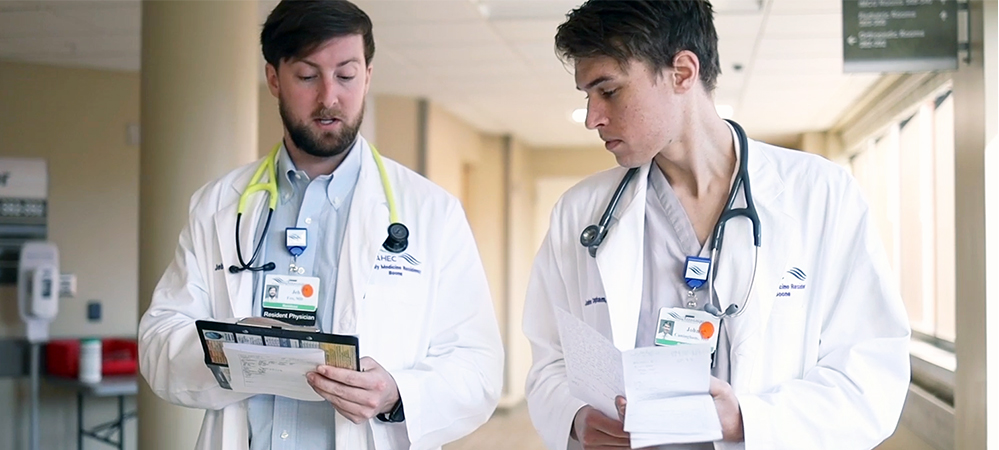
Our residency strives to provide broad-based family medicine to our patients, and we are proud to be a central force in building healthcare systems for all people in our community.
One of the primary benefits of being in a community hospital is the sense of connection and mutual care that is fostered in smaller environments. This is very apparent in our relationship to hospital administration, who make every effort to support our residents as this program continues to grow and change. Several of our faculty members are on the hospital board and have significant influence on the direction of hospital policy and practice, and our residents are made part of the healthcare community from their first day on site. Both the CEO of Appalachian Regional Healthcare System (ARHS), Chuck Mantooth, and our Chief Physician Executive, Dr.Danielle Mahaffey, work out of the office directly adjacent to the resident workroom, and, as a result, our residents interact with the highest level of hospital administration on a regular basis. The leadership at ARHS is completely independent and non-profit, so management decisions can be made for the benefit of the local community without compromising care for a bottom line.
We are proud to have strong relationships with local providers, and the “small town” feel of Boone allows our residents to quickly integrate into the healthcare system. Our specialist providers often work with residents directly in a clinical setting, as well as providing lectures for our afternoon didactic sessions. This builds a mutual understanding between residents and specialists and creates a relaxed, friendly environment for referrals and consultations. The fresh nature of our program allows for residents to build out their own electives when there isn’t a formal relationship in place, providing the opportunity for strong, systems-based learning that can’t be taught in a classroom. As with MAT, Integrated Prenatal Care, and Wilderness Medicine, our residents are often working within local systems to provide better care for our patients, and we are happy to have steady, positive support from both hospital administration and local physicians.

Boone is a thriving creative community which hosts local events throughout the year. Surrounding communities also celebrate longstanding cultural traditions which help develop a strong sense of place in the hills of North Carolina. Our residents are welcomed and encouraged to attend these events, and they often organize group outings to experience the community together. All of the towns listed below are within an hour’s drive of Boone, and traveling to these festivals is often part of the experience. Providing our residents the opportunity to experience local cultures, traditions, and gatherings within the beautiful setting of Appalachia is strongly valued at our residency.
Scenic photos used with permission from Meta Gatschenberger.


